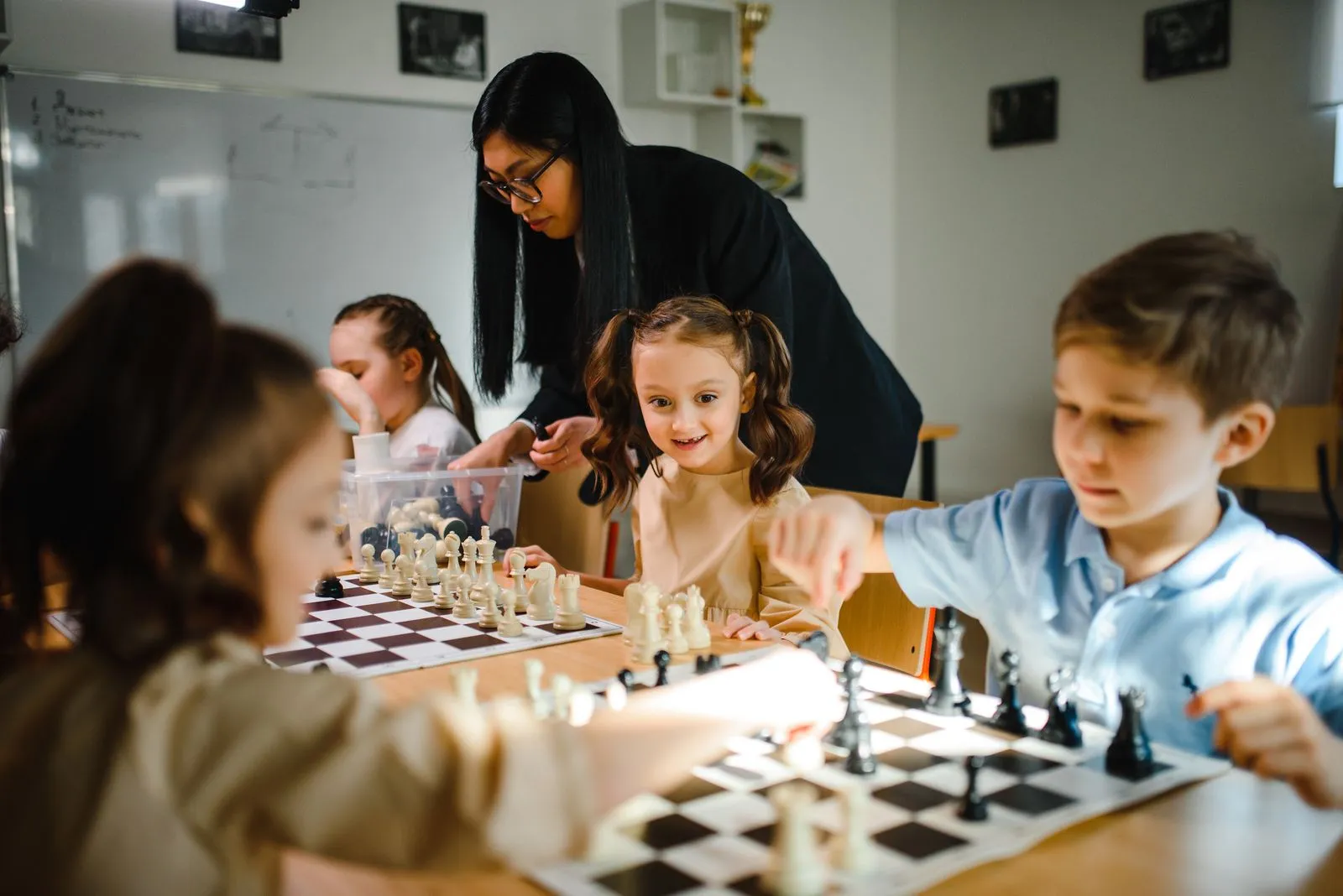
Good chess habits do not require memorizing long move sequences. Junior beginners can make stronger decisions by focusing on three basics: protect the king, bring pieces into play, and check what the opponent’s last move threatens. These habits help players avoid common early mistakes and understand why a move works. Use the ideas below during practice games, taking time to explain each choice rather than trying to move quickly.
Start Safely in the Opening
At the start of a game, aim to control the center with pawns and make room for your other pieces. The central squares give pieces more paths across the board. A pawn move toward the center can help, but avoid moving several pawns without a plan. After each pawn move, ask whether it opens a route for a knight or bishop.
Get the king to safety by castling when the path is clear and the rules allow it. Castling moves the king away from the center and brings a rook closer to the game. Before castling, check that the king and rook have not moved, the squares between them are empty, and the king is not moving through check. Do not delay simply to chase a pawn or make extra pawn moves.
Develop Pieces with Purpose
Bring knights and bishops off their starting squares so they can influence the board. Knights often work well near the center, where they can reach more squares. Bishops need open diagonals, so notice whether your own pawns block their routes. Try to develop a new piece before moving the same piece repeatedly without a clear reason.
Connect your rooks by developing the pieces between them and castling. Then place a rook on a file with few or no pawns, where it can see farther along the board. Avoid bringing the queen out too early to attack by itself. An opponent can chase it with smaller pieces, making you spend turns moving the queen instead of developing.
Check for Basic Threats
Before making a move, pause and ask: “What did my opponent’s last move attack?” Look for pieces that are under attack, a square where a check could happen, or a piece that may be captured next. Also check whether the opponent’s move opened a line for a bishop, rook, or queen. This quick scan can prevent many avoidable losses.
Use a simple safety check before you release your piece: Is my king safe? Is the piece moving to a square where it can be captured? Does my move leave another piece undefended? If you spot a threat, consider moving the target, protecting it, capturing the attacker, or blocking the attack when legal. After your opponent moves, scan the board again rather than assuming your plan is still safe.
Make Practice Games Count
In practice, choose one habit to focus on at a time. One game can be about castling early; another can focus on developing each minor piece before moving the queen. After the game, look for the first moment a piece was left undefended or a threat went unnoticed. Reviewing one decision is often more useful for a beginner than replaying every move.
A coach or practice partner can help a junior player explain their thinking aloud. Ask questions such as, “What is that piece attacking?” and “Which of your pieces is least active?” Keep the discussion calm and specific. When a mistake happens, identify the clue that could have revealed the danger, then try to notice that clue in the next game.
Safe openings, purposeful development, and a brief threat check give junior beginners a reliable foundation. Encourage players to pause, look at the whole board, and explain their choices. Regular practice helps these habits become natural. For guided beginner practice, contact Canberra Chess Club to learn about junior sessions.